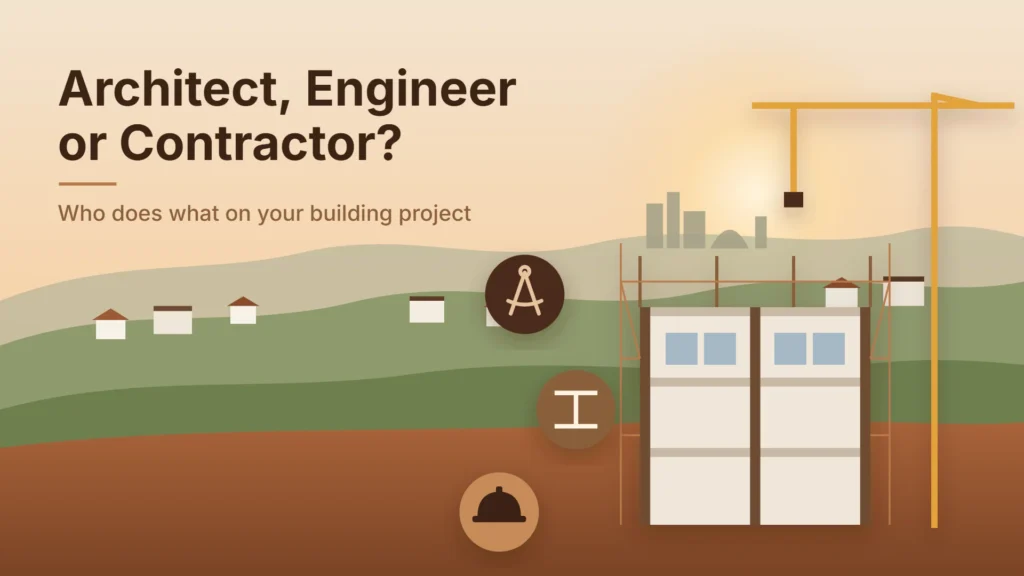
Most people building in Rwanda for the first time meet the same question early on: do I need an architect, an engineer, a contractor, or all three? The roles overlap in conversation, but they are different jobs, done by different professionals, and since 2025 a single law governs the three design professions.
This guide explains who does what on a building project, who regulates each profession, and how to check that the people you hire are registered.
The short answer
| Professional | Main job | Professional body | When you need them |
|---|
| Architect | Designs the building: layout, appearance, function and the architectural drawings | Rwanda Institute of Architects (RIA) | From the first sketch, through the permit, and during construction for design questions |
| Structural / civil engineer | Designs the foundations, frame and slabs so the building is safe, based on the site and soil | Institution of Engineers Rwanda (IER) | During design, for the permit drawings, and for inspections on site |
| MEP engineers | Design the electrical, plumbing, drainage and mechanical systems | Institution of Engineers Rwanda (IER) | During design and installation |
| Quantity surveyor | Measures and prices the work, prepares the BOQ and controls costs and payments | Rwanda Institute of Quantity Surveyors (RIQS) | Before tendering, and at each payment and variation |
| Contractor | Builds the project according to the approved drawings, specifications and contract | Company-level checks: registration, track record, references | After the design, permit and BOQ are in place |
What the architect does
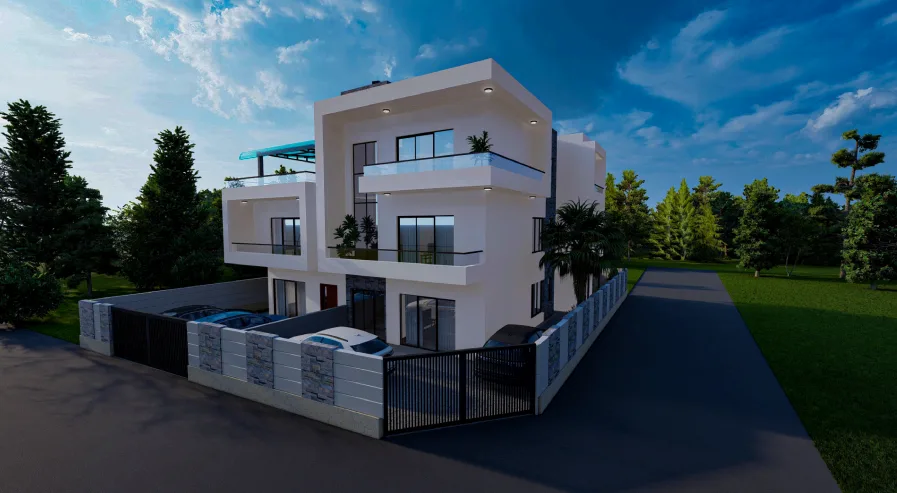
The architect turns your brief, budget and plot into a design that works and that the authorities will approve. That covers the site layout, floor plans, elevations and sections, and the coordination of the engineers’ input into one set of drawings. On most projects the architect also prepares the drawings submitted for the construction permit. Our construction permit guide explains that process.
Architecture in Rwanda is organised by the Rwanda Institute of Architects, founded in 2012, which has published warnings against unlawful practice of the profession. If you are looking for design support, see how we approach architectural design in Rwanda.
What the engineers do
Structural and civil engineer
The structural engineer makes sure the building stands up safely for its whole life. They size foundations, columns, beams and slabs, specify concrete and reinforcement, and respond to the soil conditions on your plot. Rwanda’s hilly sites make this work especially important for retaining walls, cut-and-fill platforms and drainage.
MEP engineers
Mechanical, electrical and plumbing (MEP) engineers design the systems that make the building usable: power distribution, lighting, water supply, drainage and, on larger buildings, ventilation and fire safety systems.
All engineering professionals must be registered and licensed by the Institution of Engineers Rwanda. According to IER’s announcement of the new law, individuals and organisations may not engage unregistered people for engineering duties, and the titles Engineer, Technologist, Technician and Consulting Firm require valid registration and an active practising licence. IER asks clients to verify professionals through its registry.
What the quantity surveyor does
The quantity surveyor turns drawings into numbers. They measure every item of work, prepare the Bill of Quantities, help compare contractors’ prices, value work for each installment payment and price any changes. Our guide to the Bill of Quantities in Rwanda explains what a good BOQ looks like. The profession is organised by the Rwanda Institute of Quantity Surveyors.
What the contractor does
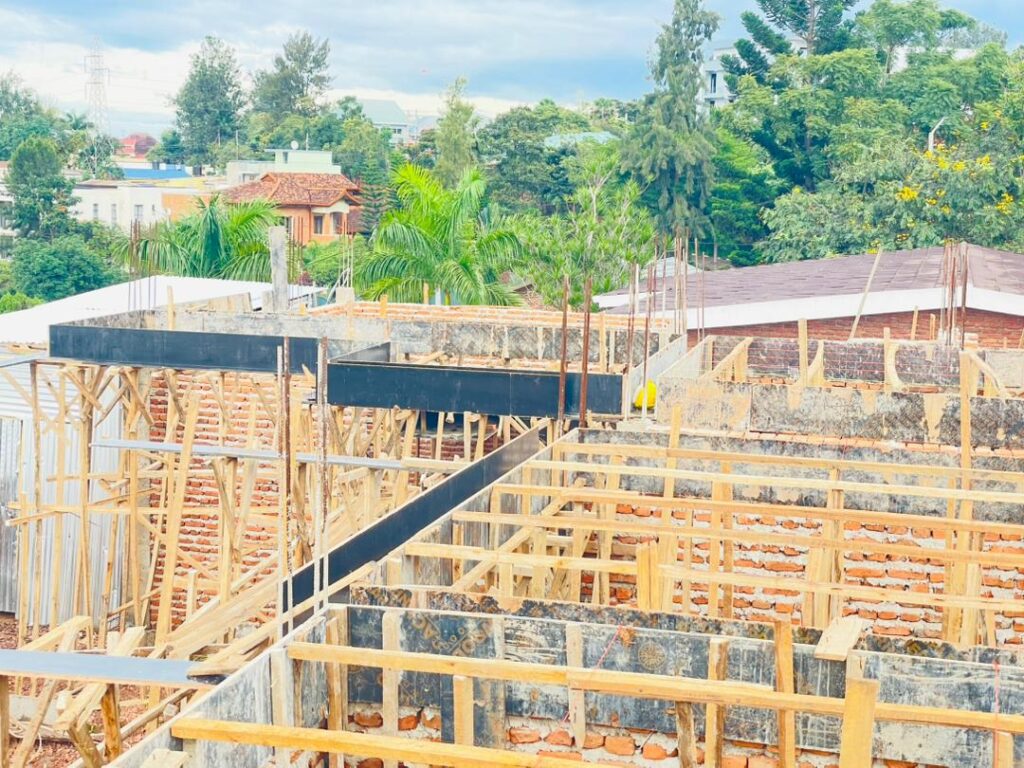
The contractor builds. They organise labour, materials, equipment and subcontractors, and deliver the work described in the drawings, specifications and BOQ, for the agreed price and programme. A good contractor will also raise practical questions about the design, but the design responsibility normally stays with the architect and engineers unless the contract says otherwise.
Before you sign, check the company’s registration documents, completed projects and references. Our sister studio’s checklist on choosing a construction company in Kigali covers the checks in detail.
The law that now governs the design professions
Law n° 023/2025 of 01/09/2025 governs the professions of architecture, engineering and quantity surveying. The Rwanda Institute of Quantity Surveyors publishes the law on its website, and IER reports that it repeals the previous engineering law, Law No. 26/2012. For a client, the practical message from all three professional bodies is the same: engage only registered, licensed professionals and check their status before you hire them.
How the roles fit together, stage by stage
- Brief and site: you agree your needs and budget; the architect studies the plot, and the engineer assesses the soil and slope.
- Design: the architect develops the design, while the engineers design the structure and services.
- Permit: the coordinated drawings are submitted for the construction permit. If you buy a plot that already has one, read how building permit transfer works.
- BOQ and tender: the quantity surveyor prepares the BOQ, and contractors price it.
- Construction: the contractor builds; the architect and engineers inspect and answer questions; the quantity surveyor values each payment.
- Handover: defects are checked, the final account is agreed and you receive the building.
For a fuller walk-through from land to handover, see the 9 stages of building a house in Rwanda.
Common mistakes to avoid
- Asking a contractor to “draw something” for the permit without a registered architect and engineer.
- Skipping site supervision to save money, then discovering structural problems after the walls are up.
- Comparing contractors on a single total price instead of a priced BOQ.
- Changing the design during construction without updating the drawings and the agreed price.
Checklist: verifying a professional before you hire
- Ask for their registration number with RIA, IER or RIQS, and check it with the relevant body.
- Ask which person will sign the drawings or reports, and confirm that this person is registered.
- Ask for two or three comparable projects you can visit.
- Agree the scope, fees and deliverables in writing.
This article is general guidance. Registration rules and procedures are set by the professional bodies, so confirm current requirements with RIA, IER or RIQS directly.